
Send E-Flower Tell a Friend Ask Gardener Resource Best Perennials Picture Perfect Perennials Culinary Plants Top Ten Design Tips How To Retailer Information Advanced Search
Company Logo
  Join our club! Join our discussion board!
September 09, 2010 
ToolBar
  Home
Home

Learn more here


  • The New Perennial Club
  • Newsletter/Archive
  • About Us
  • Contact
  • Media eMail Alerts
  • In the News
  • Top Sellers
  • Feedback
  • Bug Report
  • Poisonous Plants
  • Dealer Locator
  • Learn How to Search
  • Plant Tag Symbols


Click to learn more Click to learn more
Happy Ever Appster Daylilies Trophytaker Daylilies


PerennialHeritage Perennial Profile

Here's the complete description for this Heritage Perennial. Drop in any time to see the rest of our collection.

 Plant Number: 9.046.100USDA Zone: 3 - 9 
Osmunda regalis
Common name :  Royal Fern
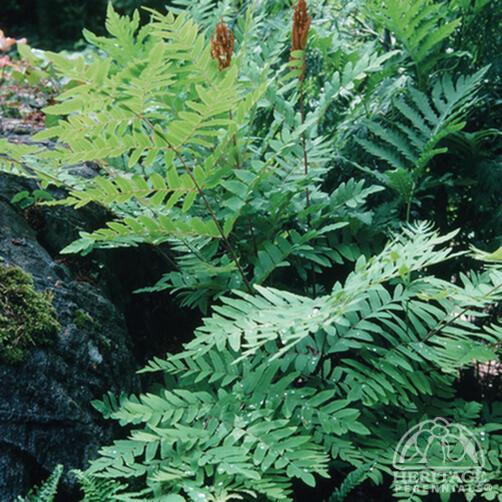
Native all over the Northern Hemisphere, Royal Fern is one of the largest and most spectacular species for the garden. It forms an upright clump with tall, arching fronds of bright green divided leaves. Brownish spore-bearing pinnae are clustered at the end of each leafy frond in a short spike. Loves moist to wet soil, tolerating full sun in cool summer regions. Old leaves should be pruned to the ground in late winter. Deciduous. Received a Royal Horticultural Society Award of Garden Merit (1993).

Conditions     Appearance    
Sun Exposure
  Full Sun
  Partial Shade
  Full Shade

Soil Type
  Normal
  Sandy
  Clay

Soil pH
  Neutral
  Alkaline
  Acid

Soil Moisture
  Moist
  Wet

Care Level
  Easy
Flower Colour

Blooming Time

Foliage Color
  Deep Green

Plant Uses & Characteristics
  Accent: Good Texture/Form
  Border
  Containers
  Deer Resistant
  Rabbit Resistant
  Massed
  Specimen
  Waterside
  Woodland

Flower Head Size

Height
   90-150 cm
   35-59 inches

Spread
   60-90 cm
   23-35 inches

Foot Traffic
   None

Growth Rate
   Medium
 Print This Plant
E-Mail This Plant


What others say about this plant...
This is a fern of unparalleled mimicry with its sterile fronds copying the locust tree leaves and the fertile panicles echoing astilbe seedheads. In the spring there are curious woolly caps on the fiddleheads which detach as the unfurling progresses.; Judith I. Jones, Zone 8",


Subscribe Today!
Over 200 new readers each month!
Over 10,000 satisfied readers and growing. Gardening tips, how-tos, show news, reader feedback, contests and more! Delivered free every month.
Sign up today!


 Credits Copyright © 2000-2010 Valleybrook International Ventures Inc. 
  Web services provided by Extreme Hosting